
General
KRITIS: What is it and why is it important?

Mar
KRITIS definition: What is KRITIS?
In an increasingly digitalized and networked world, the security of critical infrastructures (KRITIS) is becoming more and more important. But what exactly is KRITIS, for whom is it relevant and how can companies take the first steps towards implementing KRITIS measures? In this blog post, we would like to give you a KRITIS definition, answer questions and provide practical tips for getting started.
What is Kritis?
KRITIS definition and meaning
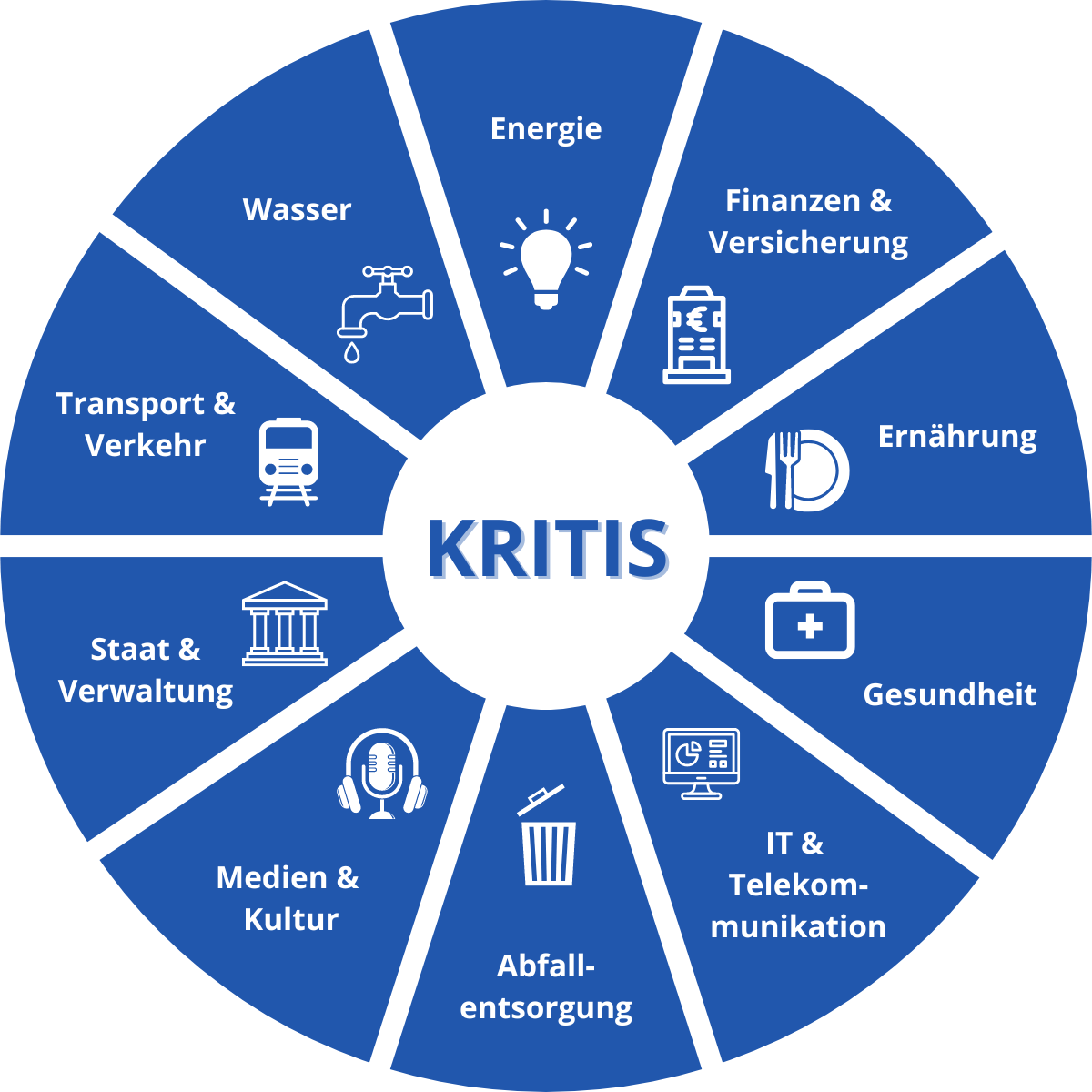
KRITIS stands for „critical infrastructure“ and refers to facilities, systems or parts thereof that are of great importance to the community. Their failure or impairment would have a significant impact on public safety and order, the economy or the health of the population. Critical infrastructures include, among others
- Energy supply (electricity, gas, oil)
- Water and wastewater supply
- Information technology and telecommunications
- Transportation and traffic
- Healthcare
- Finance and insurance
- Nutrition
The security of these infrastructures is of central importance, as their disruption or destruction can have far-reaching consequences. It is therefore essential to take measures to safeguard and build resilience against potential threats and attacks.
For whom is KRITIS relevant?
Relevant industries and sectors
KRITIS is relevant for all companies and organizations that are active in the above-mentioned sectors. This includes both public and private institutions. Operators of supply networks, hospitals, banks, logistics companies and communication service providers are particularly affected. These organizations must meet special security requirements and prepare for potential threats.
Legal requirements
In many countries, including Germany, there are legal requirements that regulate the security of KRITIS. The IT Security Act (IT-SiG) and the EU Directive on the Security of Network and Information Systems (NIS Directive) set out framework conditions and obligations for operators of critical infrastructures. These legal regulations are intended to ensure that suitable technical and organizational measures are taken to protect infrastructures.
What are the first steps in implementing KRITIS?
 Risk analysis and threat assessment
The first step towards implementing KRITIS measures (Info BSI) is a comprehensive risk analysis and threat assessment. Companies must identify which of their infrastructures are classified as critical and what threats exist for them. This analysis forms the basis for all further security measures.
Development of a security concept
Based on the Risk analysis a detailed security concept should be developed. This concept should include technical and organizational measures to secure critical infrastructures. These include, among other things:
- Access controls
- Network security
- Protection against physical destruction
- Emergency plans and redundancies
Implementation and monitoring
The development of the security concept is followed by the implementation of the defined measures. This often requires investment in technology and training for employees. An important aspect is the Continuous monitoring (e.g. MDR) and adapting security measures to respond to new threats.
Cooperation with authorities and experts
Critical infrastructure operators should work closely with government agencies and security experts. This not only helps with compliance with legal requirements, but also provides access to valuable resources and expertise. Regular exchanges and joint exercises can further strengthen resilience.
Sensitization and training of employees
Training and sensitizing employees to security issues is another important step. Employees need to know how to recognize threats and respond appropriately. Regular training and exercises help to raise security awareness and improve the ability to react in an emergency.
Conclusion: KRITIS definition & for whom is it relevant?
The security of critical infrastructures is of vital importance to the community. Companies and organizations in relevant sectors must take comprehensive measures to protect their infrastructures against threats. A thorough risk analysis, a solid security concept, continuous monitoring and cooperation with authorities and experts are essential. By taking the right steps, companies can increase their resilience and make an important contribution to the security of society.
Would you like to switch?
Save now with our SME offers
- Save up to 40% now
- Latest technology
- Simple changeover & easy operation
