
General
Cyber insurance: Guide to better protection and lower premiums

Apr
Cyber insurance: Guide to better protection and lower premiums
Companies are more dependent than ever on the security of their IT infrastructures. Cyberattacks, data leaks and other IT security incidents pose serious threats. Not only do they disrupt operations, they also cause high financial losses. This is where the Cyber insurance for companies comes into play - a special insurance policy that protects companies against the financial consequences of cyber incidents. But how do you choose the right cyber insurance and how can you reduce your insurance premiums through good cybersecurity? In this article, we give you valuable tips and specific recommendations.
- The basics of cyber insurance
- Requirements for cyber insurance
- Limits of cyber insurance
- Conclusion: cyber insurance for companies
The basics of cyber insurance
Why cyber insurance is essential
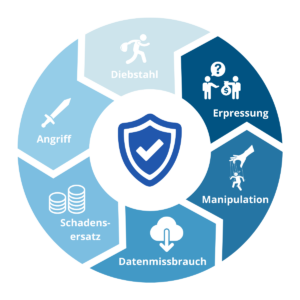 Imagine your company becomes Victim of a ransomware attack. Suddenly your sensitive data is encrypted and the attackers demand a ransom. Without cyber insurance, you face considerable costs for restoring the data, possible legal disputes and the loss of your customers' trust. Cyber insurance covers these risks and therefore offers financial safety net. But what exactly should such insurance include?
Comprehensive cyber insurance should cover risks such as cover data leaks, cyber extortion, business interruption and liability claims. It is important that the sum insured is high enough to cover all potential losses and that the amount of the excess in the event of a claim is acceptable. In addition, insurers with a good reputation and additional preventive services should be chosen.
Important aspects when choosing cyber insurance
- Scope of cover: Make sure the policy covers a wide range of risks, including data leaks, cyber extortion, business interruption and liability claims.
- Sum insured: Make sure that the sum insured is high enough to cover potential damage. This depends on the size of your company and the type of data stored.
- Deductible: Check the amount of the excess that you have to pay in the event of a claim. A lower excess usually leads to higher premiums, but also to lower costs in the event of a claim.
- Reputation of the insurer: Choose an insurer with a good reputation and experience in the field of cyber insurance. Reviews and references from other companies can be helpful here.
- Additional services: Some insurers offer preventive services such as security audits, training and support in the event of a crisis. These can significantly increase the added value of your insurance.
Tips for reducing insurance premiums through good cybersecurity
A solid IT security strategy can not only reduce the likelihood of a cyber-attack, but also have a positive impact on your insurance premiums. Here are some proven measures:
- Regular safety audits: Carry out comprehensive security checks on a regular basis. These help to identify and eliminate vulnerabilities before they can be exploited.
- Training of employees: Raise your employees' awareness of cyber risks and train them in the secure use of IT systems. A well-informed team is the first line of defense against cyber attacks.
- Current software and systems: Keep your Software and systems are always up to date. Security updates should be installed promptly to close known security gaps.
- Multi-factor authentication (MFA): Implement MFA to additionally secure access to sensitive data and systems. This makes it considerably more difficult for attackers to gain unauthorized access to your network.
- Incident Response Plan: Develop a comprehensive incident response plan. This plan should contain clear steps for dealing with cyber incidents and should be tested regularly.
Regular security audits identify and eliminate weak points. The training of employees sensitizes them to cyber risks and strengthens its defense capabilities. The continuous updating of software and systems closes known security gaps. Multi-factor authentication (MFA) significantly increases the security of access to sensitive data, and a well-developed incident response plan enables a fast and effective response to cyber incidents.
Examples for the reduction of insurance premiums
Concrete examples from practice show that companies can improve their security through targeted security measures. Significantly reduce insurance premiums can. A medium-sized company that regularly conducts security audits and trains its employees was able to reduce its insurance premiums by 20%. Another company implemented multi-factor authentication (MFA) and achieved a reduction in premiums of 15%.
Such simple measures therefore pay off twice over for companies.
Would you like to switch?
Save now with our SME offers
- Save up to 40% now
- Latest technology
- Simple changeover & easy operation
Requirements for cyber insurance
 In order to be able to claim the full scope of benefits of cyber insurance, companies must fulfill certain basic requirements. These usually include:
- Regular backupsCompanies must carry out complete data backups on a weekly basis and keep them physically separated.
- Updated software: Outdated software poses a risk, so it is essential that all programs used are updated regularly.
- Virus protection and firewalls: The use of virus protection programs and firewalls is mandatory in order to form the first line of defense against cyber attacks.
- Security guidelines: Compliance with legal, regulatory and contractual security regulations, including PCI standards, to minimize security gaps. For example, NIS2 or ISO 27001 certified security software.
- Password security: Implementation of guidelines for the creation and management of secure passwords and regular password changes.
Regular backups and updating the software guarantee the Protection against data loss and security breaches. Antivirus programs and firewalls provide a first line of defense against cyberattacks, while strict security policies and password security are essential requirements to maintain insurance coverage.
Limits of cyber insurance for companies
Although cyber insurance offers comprehensive protection, there are certain limits and exclusions, that you should be aware of. For example, losses caused by power or internet outages are typically not covered. Losses caused by war, acts of terrorism or illegal activities are also excluded. If a loss has already occurred before you take out the insurance, it will not be covered retroactively. Furthermore, cyber insurance does not usually cover losses associated with virtual currencies such as Bitcoin or Ethereum.
These exclusions make it clear that a Cyber insurance is not a panacea is. It remains important to minimize the risks that lie outside the insurance cover through other safety measures.
Typical insured events
Cyber insurance covers a large number of typical insured events that are caused by various Cyberattacks can be caused:
- Network security breach: Unauthorized access to the company network leads to data loss or theft.
- Cyber extortion: Attackers encrypt company data and demand a ransom to release the data.
- Phishing: Fake e-mails are used to trick employees into disclosing their access data, which is then misused.
- Data loss: Loss of devices or improper handling of data leads to data loss.
- DDoS attacks: IT systems are overloaded by a flood of requests, which severely restricts or paralyzes operations.
These scenarios illustrate the need for cyber insurance and the need to have financial protection against the far-reaching consequences of a cyber attack in addition to preventive measures.
Conclusion: cyber insurance for companies
Cyber insurance is a Indispensable component of risk management for every modern company. Choosing the right policy and implementing robust security measures can not only protect against the financial consequences of cyber incidents, but also significantly reduce insurance premiums. Take note of the basic requirements and be aware of the limits of your insurance.
With this guide, you are now equipped to choose the right cyber insurance for your company and take targeted measures to protect your business. Reduce insurance premiums. Invest in your IT security and protect your company from increasingly complex cyber risks.
Are you ready to take the next step and strengthen your cybersecurity? Take action now!
Would you like to switch?
Save now with our SME offers
- Save up to 40% now
- Latest technology
- Simple changeover & easy operation
